

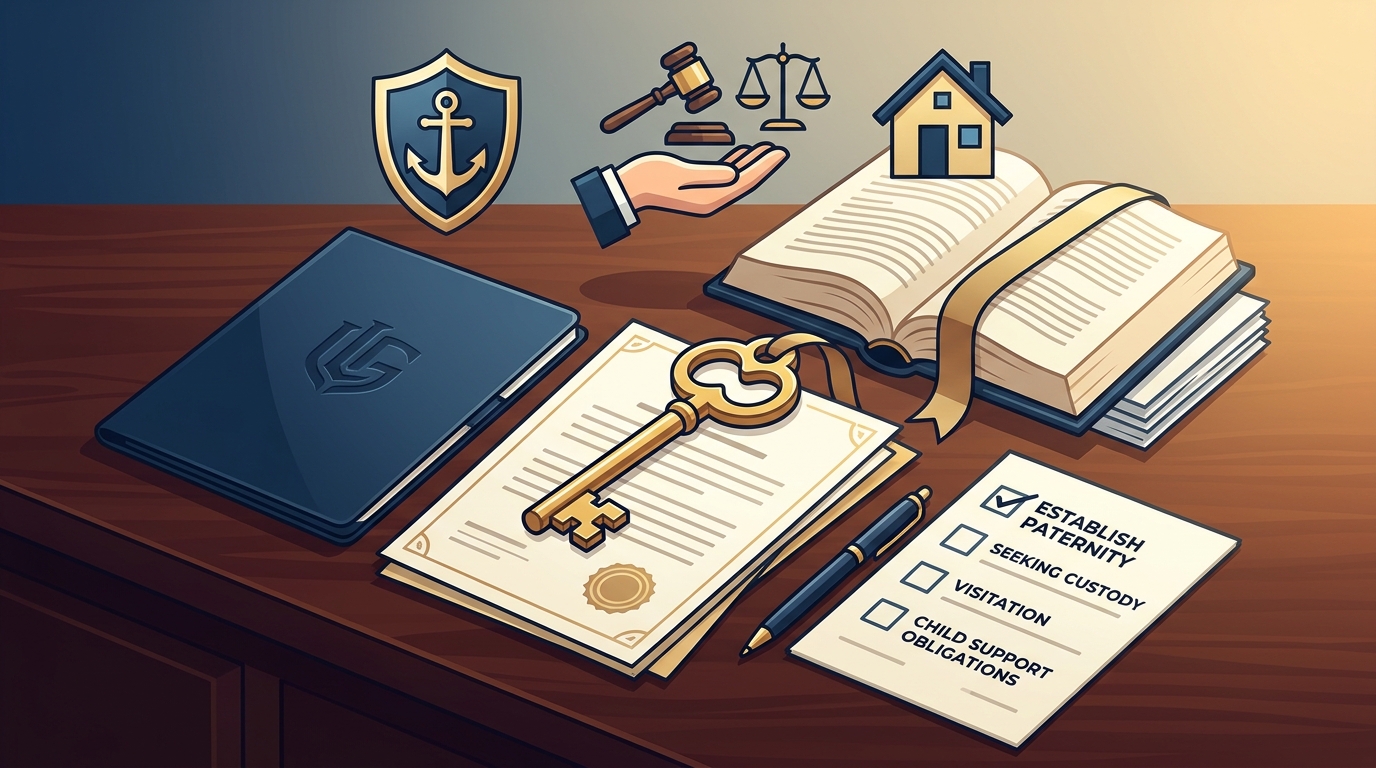
Establishing paternity is the foundational legal step for any father seeking custody, visitation, or support obligations in Florida. Without a confirmed legal link, a biological father has no standing in family court to make decisions about a child's life. Law Legal Group, P.A. helps Tampa-area fathers navigate these complex disputes with a focus on protecting parental rights from the very first filing.
1. File a Voluntary Acknowledgment of Paternity
Sign the VAP form at the hospital to establish immediate legal standing. When both parents agree on the identity of the father, they can sign a Voluntary Acknowledgment of Paternity (VAP) form. This document is often completed at the hospital immediately after the child is born. Once signed and filed with the Florida Department of Health, it establishes the father’s legal rights and responsibilities without the need for a court order.
2. Request Court-Ordered Genetic Testing
Use DNA testing to resolve disputes when paternity is contested. If paternity is disputed or the father’s identity is unknown, a court may issue a paternity order. This process typically involves DNA testing to confirm biological parentage with high accuracy. The court then makes decisions regarding parental responsibilities and rights based on the verified test results, ensuring the child's best interests are served.
3. Seek a Court Order for Parental Rights
Obtain a formal decree to secure custody and visitation rights. Paternity grants the father legal rights to seek custody and time-sharing with the child. Both parents are entitled to participate in decisions regarding the child's upbringing, including education, healthcare, and welfare. A formal court order is necessary to enforce these rights and create a binding parenting plan.
4. Establish Child Support Obligations
Comply with support guidelines to demonstrate active involvement. Once paternity is established, the father may be required to pay child support. Florida's guidelines determine the amount of support based on the income of both parents and the child’s needs. Consistent payment and adherence to support orders demonstrate a father's commitment to the child's financial well-being.
5. Negotiate a Parenting Plan
Create a detailed schedule for time-sharing and decision-making. Florida law uses the terms "parental responsibility" and "time-sharing" instead of "custody" and "visitation." Parents must submit a detailed parenting plan outlining how they will share responsibilities. This plan should include specific times the child will spend with each parent and how major decisions will be made.
6. Protect Inheritance and Benefits Rights
Ensure the child is eligible for insurance and estate benefits. Establishing paternity ensures that the child has legal rights to inheritance from the father, including property, assets, and benefits. The child may also become eligible for health insurance coverage through the father's employer or social security benefits. These financial protections are critical for the child's long-term stability.
7. Consult a Family Law Attorney
Get professional guidance to navigate complex legal procedures. Navigating paternity issues can be complex, especially in cases of dispute or non-cooperation. Consulting with an experienced family law attorney can provide crucial support in obtaining protective orders and navigating the legal process. Law Legal Group, P.A. offers personalized attention to ensure fathers' rights are protected effectively.
Choosing the Right Approach
The best method for protecting your rights depends on the specific circumstances of your case. If both parents are cooperative, a voluntary acknowledgment is the fastest route. If there is a dispute, court-ordered testing and legal representation are essential. Always prioritize the child's best interests while securing your legal standing.
Frequently Asked Questions
What happens if I am not on the birth certificate?
If you are not listed on the birth certificate, you must establish paternity through a Voluntary Acknowledgment of Paternity or a court order. Until paternity is legally established, you do not have automatic rights to custody or visitation.
Can I be forced to pay child support if I am not the biological father?
No, you are only responsible for child support if paternity is legally established. If you are not the biological father and have not signed a VAP form or been ordered by a court to acknowledge paternity, you generally have no financial obligation.
How long does it take to establish paternity in Florida?
The timeline varies. A voluntary acknowledgment can be completed in minutes at the hospital. If paternity is disputed and requires DNA testing and court proceedings, the process may take several weeks or months depending on the court's schedule.
Does establishing paternity give me full custody?
Establishing paternity gives you the right to seek custody and time-sharing, but it does not automatically grant full custody. The court will determine the parenting plan based on the best interests of the child, often favoring shared parental responsibility.
What if the mother refuses to sign the VAP form?
If the mother refuses to sign the Voluntary Acknowledgment of Paternity, you must file a petition with the court to establish paternity. The court can order genetic testing to confirm biological parentage and issue a paternity order.