

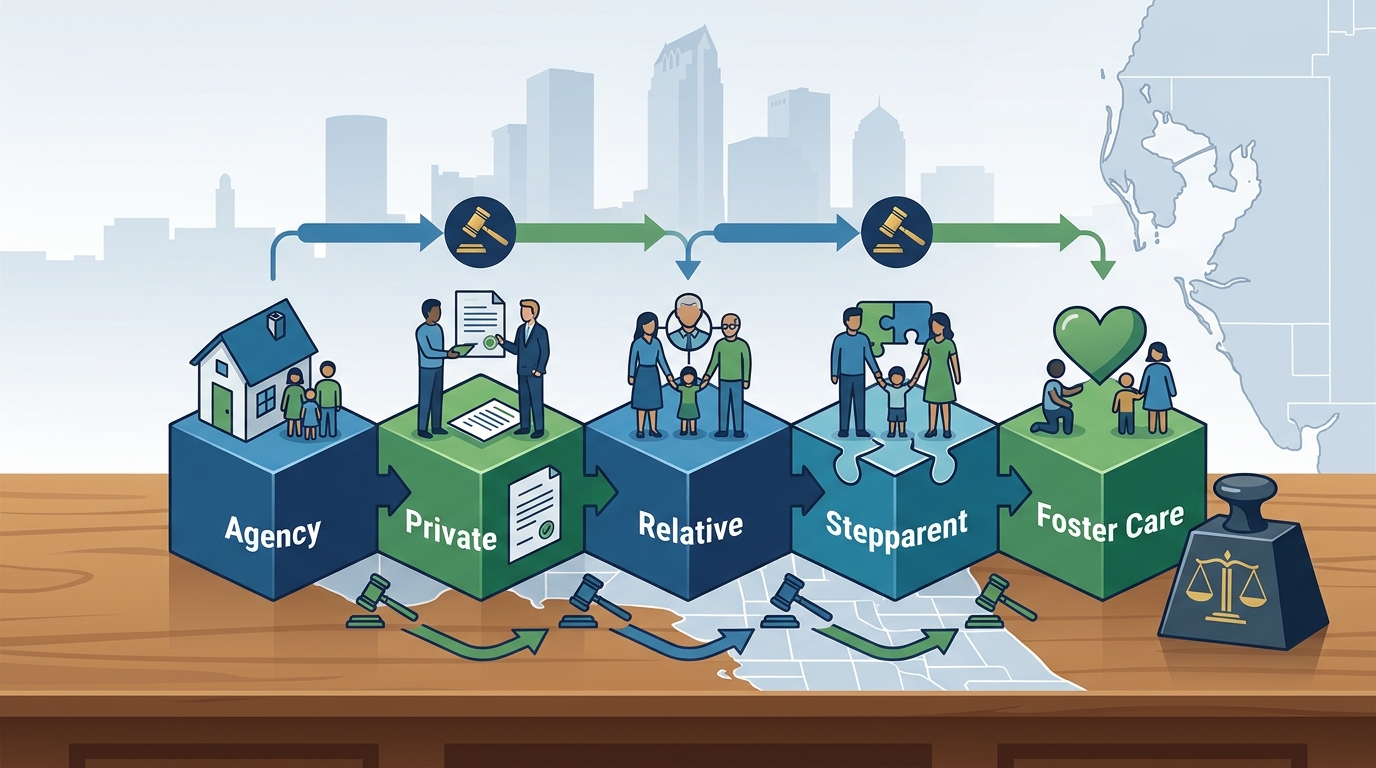
Family law attorneys in Tampa handle several distinct types of adoption cases, including agency, private, relative, stepparent, and foster care adoptions. Each category involves specific legal requirements and procedural steps under Florida law. Law Legal Group, P.A. provides specialized guidance for these matters, ensuring that prospective adoptive parents navigate the legal process with clarity and confidence. according to Adoption Overview Family
Agency and Private Adoption Proceedings
Agency adoption involves working with a licensed adoption agency to match a child with prospective parents. This process often includes a home study, background checks, and post-adoption support. Private adoption occurs when birth parents and adoptive parents work together without an agency, though it still requires strict legal compliance. Both types demand careful documentation to ensure the child's best interests are protected.
For example, an agency adoption might involve a child placed in foster care who is then matched with a family through a state-licensed organization. The legal team must verify that all consents are properly executed and that the agency has followed state regulations. This ensures the adoption is legally sound and ethically conducted.
Relative and Kinship Adoption Cases
Relative adoption, also known as kinship adoption, involves adopting a child who is related to the adoptive parents, such as a grandchild, niece, or nephew. This type of adoption is common when a child's parents are unable to care for them. The legal process may be streamlined compared to non-relative adoptions, but it still requires court approval and a home study.
Consider a scenario where a grandparent takes custody of their grandchild after the parents are incarcerated. The grandparent may seek to finalize the adoption to provide legal stability and access to benefits. Law Legal Group, P.A. assists in these cases by ensuring that the termination of parental rights, if applicable, is properly handled before the adoption is finalized.
Stepparent Adoption Procedures
Stepparent adoption allows a stepparent to legally adopt the child of their spouse. This requires the consent of the noncustodial biological parent, unless their rights have been terminated. The process strengthens the legal bond between the stepparent and the child, providing inheritance rights and other legal protections.
In a typical stepparent adoption, the married couple files a joint petition, and the noncustodial parent signs a consent form. If the noncustodial parent cannot be located or has abandoned the child, the court may terminate their rights. This ensures that the stepparent has full legal authority over the child's upbringing and welfare.
Foster Care Adoption and Termination of Rights
Foster care adoption involves adopting a child who is currently in the foster care system. This process often requires the termination of the biological parents' rights, which is a serious legal step. The court must determine that termination is in the child's best interests, often due to abuse, neglect, or abandonment.
For instance, if a child has been in foster care for an extended period and the parents have failed to comply with a case plan, the Department of Children and Families may petition for termination of parental rights. Once rights are terminated, the child becomes legally free for adoption. Law Legal Group, P.A. represents prospective adoptive parents in these cases, advocating for the child's permanency and stability.
Legal Requirements and Home Study Process
All adoption types in Florida require a home study, which includes interviews, background checks, and home inspections. This assessment ensures that the adoptive home is safe and suitable for the child. The home study is a critical component of the legal process, providing the court with information to make an informed decision.
Prospective adoptive parents must complete an application and undergo a home study before the adoption can proceed. The home study evaluates the family's financial stability, living conditions, and ability to provide a nurturing environment. This step is mandatory for all adoption types, whether agency, private, or relative.
Key Takeaways
- Agency adoption involves a licensed agency matching a child with prospective parents.
- Private adoption allows birth and adoptive parents to work together without an agency.
- Relative adoption is common for kinship placements, such as grandparents adopting grandchildren.
- Stepparent adoption requires consent from the noncustodial biological parent.
- Foster care adoption often involves the termination of biological parents' rights.
- All adoptions in Florida require a home study and court approval.
- Law Legal Group, P.A. provides expert guidance for all types of adoption cases in Tampa.
Frequently Asked Questions
What is the difference between agency and private adoption?
Agency adoption involves a licensed agency facilitating the match, while private adoption is arranged directly between birth and adoptive parents. Both require legal compliance and a home study.
Can I adopt my niece or nephew?
Yes, this is known as relative or kinship adoption. It is a common type of adoption in Florida and may involve streamlined procedures compared to non-relative adoptions.
What is a home study in adoption?
A home study is a required assessment that includes interviews, background checks, and home inspections to ensure the adoptive home is safe and suitable for the child.
Do I need to terminate parental rights for a foster care adoption?
Yes, foster care adoptions typically require the termination of the biological parents' rights before the adoption can be finalized. This ensures the child is legally free for adoption.
How long does the adoption process take in Florida?
The timeline varies depending on the type of adoption and individual circumstances. Agency and foster care adoptions may take longer due to additional steps like home studies and court hearings.
Can a stepparent adopt without the other parent's consent?
Generally, no. Stepparent adoption requires the consent of the noncustodial biological parent, unless their rights have been terminated by the court.
Conclusion
Understanding the different types of adoption cases is essential for prospective parents in Tampa. Whether you are pursuing an agency, private, relative, stepparent, or foster care adoption, the legal process requires careful navigation. Law Legal Group, P.A. offers personalized legal services to guide you through each step, ensuring that your adoption is legally sound and in the best interests of the child. To discuss your specific adoption case, book a consultation with our team today.