

Paternity is the legal recognition of a man as the father of a child. In Florida, establishing paternity is not merely a formality; it is the foundational step that unlocks critical legal rights and responsibilities for both the father and the child. Without a formal determination of paternity, the law does not recognize the biological father as the legal father, regardless of biological reality. This guide details the processes, implications, and strategic advantages of securing paternity under Florida law, drawing on the expertise of Law Legal Group, P.A. to navigate these complex family law matters.
Why Paternity Matters for Families
Many parents assume that being the biological father is enough to establish legal standing. This is a dangerous misconception in Florida. When a child is born to unmarried parents, the mother is automatically recognized as the legal parent. The father, however, has no legal rights or responsibilities until paternity is established. This gap in legal recognition can have profound effects on the child's future.
Establishing paternity ensures that the child has access to benefits that derive from the father, including health insurance, social security benefits, and inheritance rights. According to data from the U.S. Department of Health & Human Services, children with established paternity are more likely to have consistent financial support and emotional connections to both parents. This stability is crucial for healthy development.
For the father, establishing paternity is the only way to seek custody or visitation rights. Without it, the father is legally a stranger to the child, regardless of his involvement in the child's life. For the mother, it ensures that the biological father is held accountable for financial support. Law Legal Group, P.A. in Tampa, Florida, has guided countless families through this critical legal milestone since its establishment in 2014.
Voluntary Acknowledgment of Paternity
The most straightforward path to establishing paternity is through the Voluntary Acknowledgment of Paternity (VAP). This is a legal document signed by both the mother and the alleged father at the hospital after the child's birth, or at a later date through the Department of Revenue or a local child support agency.
Signing a VAP has the same legal effect as a court order establishing paternity. It allows the father's name to be placed on the birth certificate, which is often the primary motivation for many couples. However, it is vital to understand that this is a serious legal commitment. Once signed, it can be difficult to rescind, especially if more than sixty days have passed.
Before signing, both parties should fully understand the implications. This includes the obligation to pay child support and the right to seek time-sharing. If there is any doubt about biological paternity, signing a VAP can lead to complex legal battles later. Our team at Law Legal Group, P.A. advises clients to seek legal counsel before executing this document to ensure their rights are protected.
Court-Adjudicated Paternity Actions
When paternity is not voluntarily acknowledged, it must be established through a court-adjudicated paternity action. This is a formal legal proceeding filed in the circuit court. The process typically begins with the filing of a petition, which requests the court to determine the father of the child.
The court will then issue a summons to the alleged father, notifying him of the legal action. If the alleged father denies paternity, the court will order genetic testing. This is the standard procedure in Florida to ensure biological accuracy. The results of this testing are highly accurate and are generally admissible as evidence in court.
If the genetic testing confirms paternity, the court will enter an order establishing paternity. This order will also address related issues such as child support, time-sharing (visitation), and contribution to medical expenses. For families navigating this process, having experienced legal representation is crucial. Child custody and support disputes can become emotionally charged, and professional guidance helps keep the focus on the child's best interests.
The Role of Genetic Testing
Genetic testing is the gold standard for establishing paternity in Florida. It involves collecting DNA samples from the child, the mother, and the alleged father. The samples are typically collected via cheek swabs, which is a non-invasive and painless procedure.
The accuracy of modern genetic testing is extremely high. According to the American Association of Blood Banks, paternity tests can exclude a non-father with 100% certainty and include a father with a probability of paternity of 99.9% or higher. This scientific certainty provides a clear path for the court to make a determination.
In some cases, the court may order genetic testing even if one party denies paternity. If the alleged father refuses to submit to testing, the court may draw an adverse inference, meaning it may presume paternity based on the refusal. This legal mechanism ensures that the process cannot be stalled indefinitely by one party.
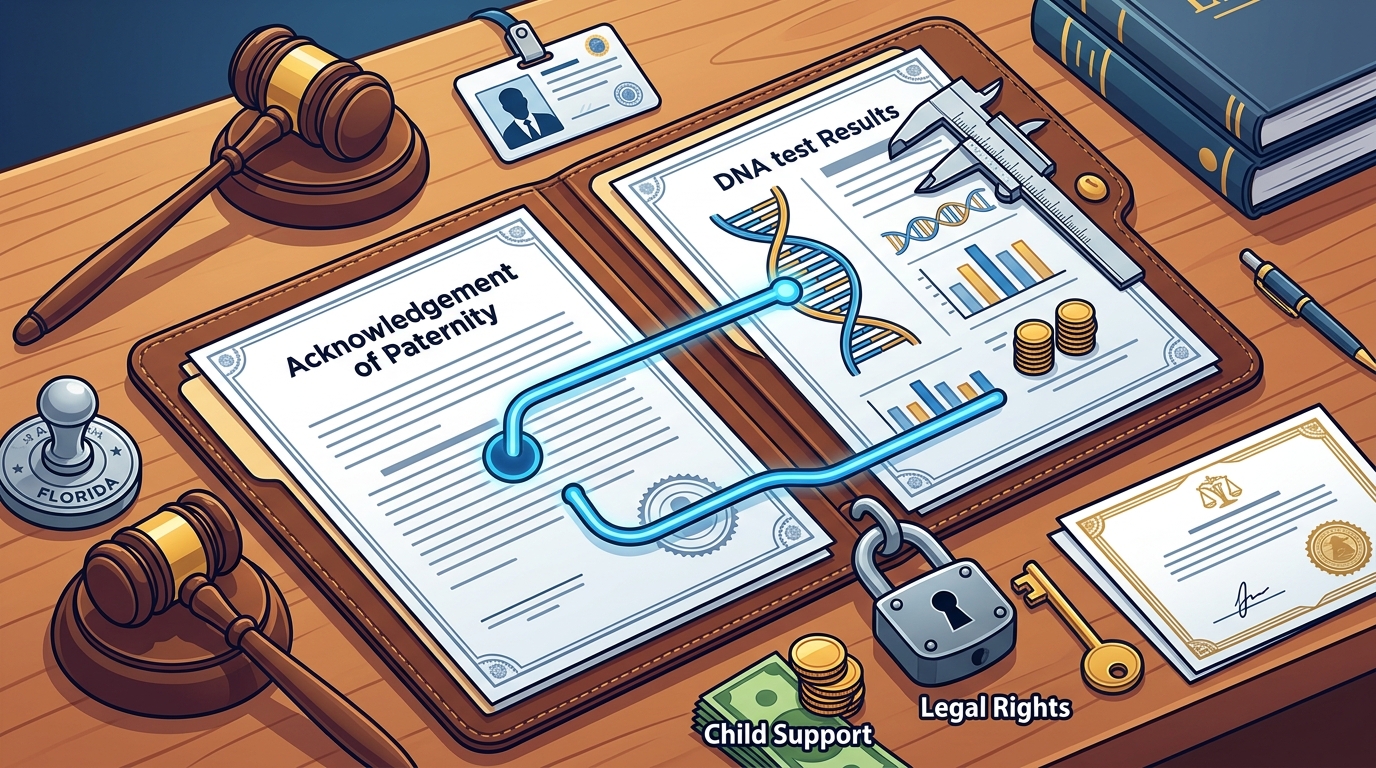
Rights and Responsibilities Post-Paternity
Once paternity is established, the legal landscape changes dramatically for both parents. The father gains the right to seek time-sharing, which defines how much time the child spends with each parent. This is distinct from traditional "visitation" and reflects a more equal partnership in parenting.
Along with rights come responsibilities. The father is legally obligated to provide financial support for the child. Florida uses specific guidelines to calculate child support, which consider both parents' incomes, the number of overnights, and healthcare costs. Failure to pay child support can result in severe consequences, including wage garnishment, license suspension, and even imprisonment.
Additionally, the father has the right to be involved in major decisions regarding the child's education, healthcare, and religious upbringing. This shared decision-making authority is a key component of modern family law. For complex cases involving alimony or significant assets, the interplay between paternity and other family law issues can be intricate.
Law Legal Group, P.A. offers comprehensive support in these areas. Our attorneys, including founder Joshua Law, Esq., and associate Wesley Schini, Esq., bring diverse legal backgrounds to every case. Wesley Schini, Esq., for instance, has extensive experience in juvenile dependency proceedings, which often intersect with paternity issues. You can learn more about his qualifications on our About Us page.
Impact on Child Benefits
Establishing paternity also impacts the child's access to government benefits. These may include:
- Social Security Benefits: If the father becomes disabled, retires, or passes away, the child may be eligible for benefits.
- Medicare: Similar to Social Security, benefits may be available if the father is eligible.
- Veterans Benefits: If the father is a veteran, the child may be eligible for healthcare and educational benefits.
- Medicaid: Paternity establishment can help determine eligibility for state healthcare programs.
Modification of Orders
Life circumstances change, and so may the need for child support or time-sharing. Florida law allows for the modification of paternity-related orders if there is a substantial, material, and unanticipated change in circumstances. This could include a job loss, a significant increase in income, or a change in the child's needs. Our firm provides modification of orders services to help families adapt to these changes legally and fairly.
Key Takeaways
- Legal Recognition: Paternity is the legal foundation for a father's rights and responsibilities in Florida.
- Voluntary Acknowledgment: Signing a VAP is a serious legal step that can be difficult to reverse after 60 days.
- Genetic Testing: DNA testing is the standard method for resolving disputes over biological paternity.
- Child Benefits: Established paternity unlocks access to social security, veterans, and health benefits for the child.
- Financial Support: Fathers are legally obligated to pay child support based on Florida guidelines.
- Time-Sharing: Paternity grants fathers the right to seek equal parenting time, not just visitation.
- Expert Guidance: Navigating paternity law requires experienced legal counsel to protect all parties' interests.
Frequently Asked Questions
What is the difference between paternity and custody?
Paternity establishes the legal father-child relationship, while custody (or time-sharing) determines how parenting time and decision-making responsibilities are divided between the parents. Paternity must be established before custody can be determined.
Can paternity be established after the child is born?
Yes, paternity can be established at any time after birth through voluntary acknowledgment or a court order. There is no statute of limitations for establishing paternity in Florida, although delays can complicate child support calculations.
What happens if the father refuses to take a DNA test?
If the alleged father refuses to submit to genetic testing, the court may issue an order establishing paternity by default. The court can draw an adverse inference from the refusal, treating it as an admission of paternity.
How does paternity affect child support?
Establishing paternity is the prerequisite for ordering child support. Once paternity is established, the court will calculate support based on both parents' incomes and the time-sharing schedule, ensuring the child's financial needs are met.
Can a paternity order be modified?
Yes, paternity-related orders, including child support and time-sharing, can be modified if there is a substantial, material, and unanticipated change in circumstances. This requires a petition to the court and often legal representation.
What is the Voluntary Acknowledgment of Paternity?
The VAP is a legal document signed by both parents that establishes the father as the legal parent. It is equivalent to a court order and allows the father's name to be placed on the birth certificate.
Do I need a lawyer to establish paternity?
While not legally required, having a lawyer is highly recommended. Paternity cases involve complex legal rights and financial obligations. An attorney can ensure your rights are protected and help navigate the court process efficiently.
Contact Law Legal Group for Paternity Assistance
Establishing paternity is a critical step in securing your family's future. Whether you are seeking to establish your rights as a father, ensure financial support for your child, or navigate the complexities of family law, Law Legal Group, P.A. is here to help. Our team, led by Joshua Law, Esq., provides compassionate and strategic legal representation tailored to your unique situation.
We serve clients throughout Tampa and the surrounding areas. Contact us today to schedule a consultation and take the first step toward legal clarity. Visit our Consultation page to book an appointment online or call us at 813-443-8342. Let us help you protect what matters most.