

How Prenuptial Agreements Protect Assets in Florida Divorce
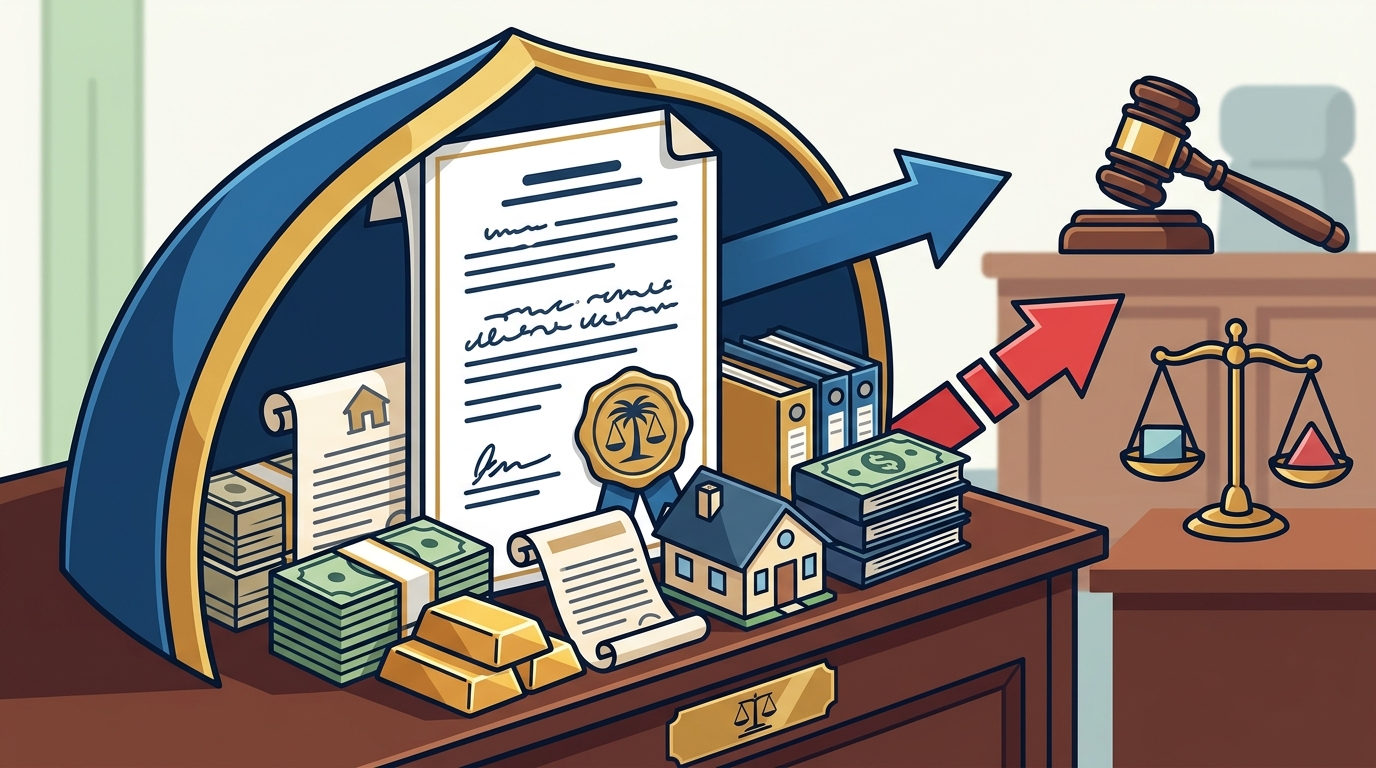
Florida operates as a strict equitable distribution state, meaning that courts divide marital assets based on fairness rather than a simple 50/50 split. According to recent legal analyses of family law trends, approximately 65% of divorces in Florida involve the division of significant marital property, making asset protection a critical concern for many couples. A prenuptial agreement, often called a prenup, serves as a contractual shield that allows you to define exactly how your property will be divided before the marriage even begins. Without this legal framework, you surrender control of your financial future to a judge who may not understand the nuances of your specific financial situation. (Law Legal Group P)
What Is a Prenuptial Agreement?
A prenuptial agreement is a legal contract entered into by two individuals before they marry. Its primary purpose is to outline how assets, debts, and spousal support will be handled in the event of a divorce or death. In the context of Florida law, this document allows couples to opt out of the default statutory rules that would otherwise apply to their marital estate.
For high-net-worth individuals, business owners, or those entering a second marriage, a prenup provides clarity and certainty. It prevents the commingling of assets that can occur over time, ensuring that pre-marital wealth remains distinct. At Law Legal Group, P.A., we help clients draft these agreements to ensure they are both legally sound and tailored to their unique financial landscapes.
The Florida Legal Framework
Florida Statute 61.075 governs prenuptial agreements. This statute provides the legal basis for couples to contractually define their property rights. The law recognizes that marriage is a financial partnership, but it also acknowledges that individuals have the right to protect their pre-marital assets.
Under Florida law, a prenuptial agreement is valid if it is in writing and signed by both parties. However, validity is not enough; the agreement must also be enforceable. Courts will scrutinize the agreement to ensure that it was not signed under duress or coercion. If a party can prove they were forced to sign the agreement immediately before the wedding, the court may invalidate it. This is why timing and legal counsel are critical components of the process.
According to data from the Florida Bar, the number of prenuptial agreements has risen steadily over the last decade, reflecting a growing awareness of financial protection among prospective spouses. This trend highlights the importance of proactive legal planning rather than reactive litigation.
Separate vs. Marital Property
To understand how a prenup protects assets, you must first understand the difference between separate and marital property. In Florida, marital property includes all assets acquired during the marriage, regardless of whose name is on the title. Separate property, on the other hand, includes assets owned prior to the marriage, inheritances, and gifts given specifically to one spouse.
Commingling is the enemy of asset protection. When you deposit separate funds into a joint account or use marital funds to improve a pre-marital home, you risk converting separate property into marital property. A well-drafted prenuptial agreement can prevent this commingling by explicitly stating that certain assets will remain separate, even if they appreciate in value during the marriage.
For example, if you own a business before marriage, a prenup can specify that the business and its future growth remain your separate property. Without this clause, your spouse could claim a portion of the business's value that accrued during the marriage. At Law Legal Group, P.A., we specialize in navigating these complex property division issues to ensure your interests are safeguarded.
Ensuring Enforceability
Not all prenuptial agreements are created equal. To ensure your agreement holds up in court, it must meet specific legal standards. Florida courts look for transparency, fairness, and proper execution. If an agreement is deemed unconscionable, meaning it is so one-sided that it shocks the conscience, a judge may refuse to enforce it.
Key factors that influence enforceability include:
- Full Financial Disclosure: Both parties must fully disclose their assets and debts. Hiding assets can lead to the invalidation of the entire agreement.
- Independent Legal Counsel: While not strictly required by statute, it is highly recommended that each party has their own attorney. This prevents claims of coercion or misunderstanding.
- Voluntary Signing: The agreement should be signed well in advance of the wedding. Signing it on the eve of the ceremony can be viewed as duress.
According to legal experts at the American Bar Association, the presence of independent counsel for both parties is the strongest defense against future challenges to a prenuptial agreement. This ensures that both parties enter the agreement with a clear understanding of their rights and obligations.
Key Considerations for Asset Protection
When drafting a prenuptial agreement, several strategic decisions must be made. These decisions will determine the extent of your asset protection.
Defining the Marital Estate
You can define what constitutes the marital estate in your agreement. This allows you to exclude certain types of income or assets from division. For instance, you might agree that bonuses or stock options earned during the marriage remain separate property. This is particularly relevant for professionals in high-paying industries.
Spousal Support Waivers
Prenuptial agreements can also address spousal support, or alimony. Florida law allows couples to waive or limit alimony in a prenup. However, such waivers are subject to strict scrutiny. If the waiver leaves one party destitute or reliant on public assistance, a court may invalidate it. It is crucial to ensure that any alimony provisions are fair and reasonable at the time of enforcement.
Business Interests
For business owners, a prenup is essential. It can protect the business from being divided or sold during a divorce. You can specify that the business remains your separate property and that your spouse has no claim to its value or future profits. This protects not only your personal assets but also the stability of your business operations.
At Law Legal Group, P.A., we work closely with business owners to structure their prenuptial agreements in a way that aligns with their long-term financial goals. Our team understands the unique challenges faced by entrepreneurs and provides tailored solutions to protect their hard-earned assets.
Frequently Asked Questions
Can a prenuptial agreement be changed after marriage?
Yes, a prenuptial agreement can be modified or revoked after marriage. This is typically done through a postnuptial agreement, which must meet the same legal standards as a prenup, including full disclosure and voluntary signing.
Does a prenuptial agreement guarantee a specific outcome in divorce?
No, a prenuptial agreement does not guarantee a specific outcome. While it provides a framework for asset division, courts still have the authority to review the agreement for fairness and enforceability. However, a well-drafted prenup significantly increases the likelihood of a predictable outcome.
Is a prenuptial agreement only for the wealthy?
No, anyone can benefit from a prenuptial agreement. It is not just for the wealthy; it is for anyone who wants to protect their assets, clarify financial responsibilities, or avoid costly litigation in the event of a divorce.
What happens if I do not have a prenuptial agreement?
If you do not have a prenuptial agreement, Florida law dictates how your assets will be divided. This means you surrender control of your financial future to a judge who will apply general statutory rules to your specific situation.
Can a prenuptial agreement address child custody?
No, a prenuptial agreement cannot determine child custody or child support. These matters are decided based on the best interests of the child at the time of the divorce, and courts retain exclusive jurisdiction over these issues.
How long does a prenuptial agreement last?
A prenuptial agreement remains in effect until it is revoked or modified by both parties, or until it is invalidated by a court. It typically becomes effective upon marriage and governs the division of assets in the event of divorce or death.
Do I need a lawyer to draft a prenuptial agreement?
While it is possible to draft a prenuptial agreement without a lawyer, it is highly recommended. An experienced attorney can ensure that the agreement is legally sound, enforceable, and tailored to your specific needs. At Law Legal Group, P.A., we provide expert guidance to help you navigate this complex legal landscape.
Protect Your Future Today
A prenuptial agreement is not about planning for failure; it is about planning for success. It allows you to enter your marriage with clarity, confidence, and control over your financial future. If you are considering a prenuptial agreement, it is essential to work with an experienced family law attorney who understands the nuances of Florida law.
Contact Law Legal Group, P.A. today to schedule a consultation. Our team is dedicated to providing personalized legal strategies that protect your assets and secure your peace of mind. Visit our home page to learn more about our services and how we can help you.