

Which Family Law Attorney in Tampa FL Can Help with Alimony Disputes?
Understanding Alimony in Florida
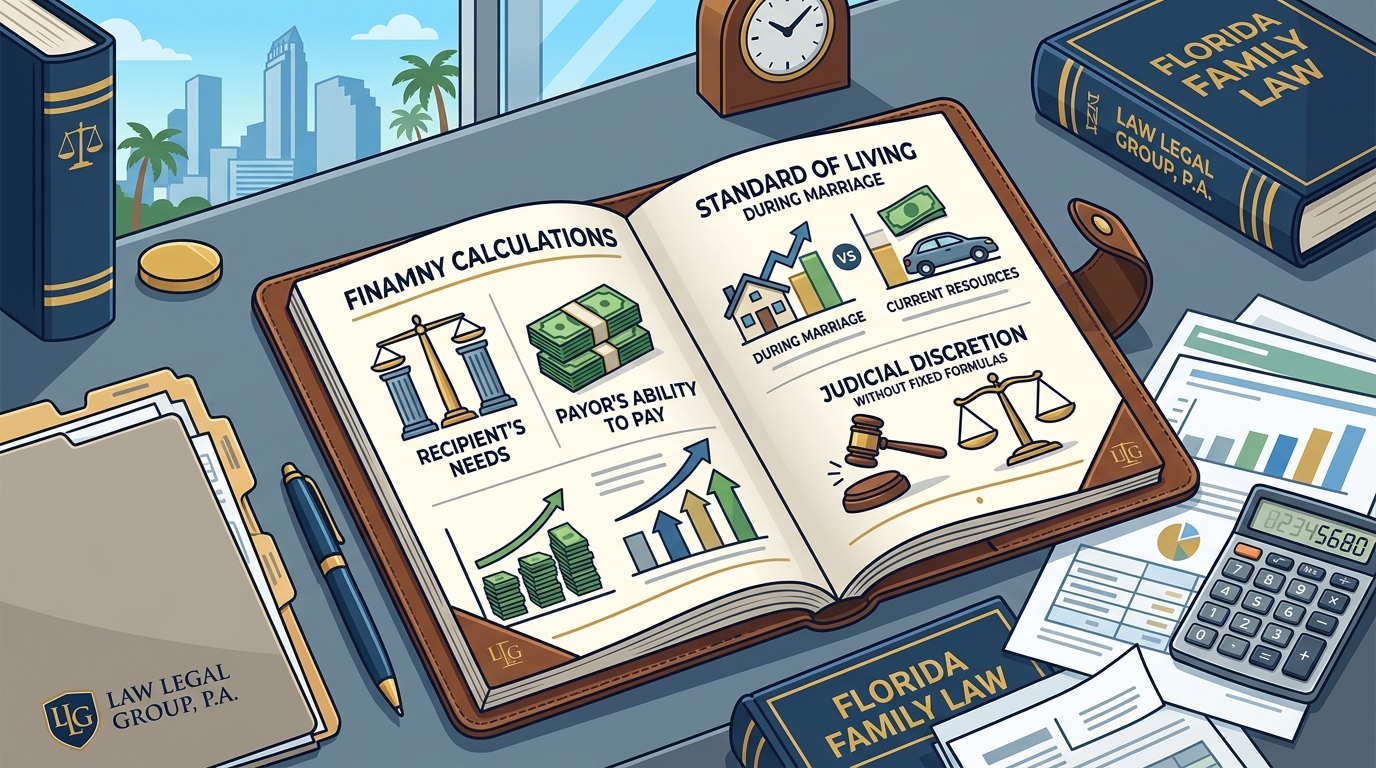
Alimony is a court-ordered payment from one spouse to another after a divorce to provide financial support. In Florida, the primary goal of alimony is to help the lower-earning spouse maintain a standard of living similar to what they enjoyed during the marriage. The state does not have a fixed formula for calculating these payments. Instead, judges have broad discretion to assess the specific needs of the recipient and the ability of the payor to pay. For additional details, review the Just a moment.
Florida law distinguishes between short-term and long-term marriages, which significantly impacts the duration and type of support awarded. A short-term marriage is generally defined as lasting less than seven years. A moderate-term marriage lasts between seven and 17 years. A long-term marriage is defined as lasting 17 years or more. These definitions help courts determine the appropriate scope of financial assistance. Understanding these thresholds is the first step in evaluating your case. For additional details, review the .
Types of Spousal Support
Florida recognizes four distinct categories of alimony. Each type serves a different purpose and has specific legal criteria. Knowing which type applies to your situation is critical for building a strong legal strategy. For additional details, review the Customer Experience.
Durational Alimony
Permanent Periodic Alimony
Rehabilitative Alimony
Rehabilitative alimony is a time-limited award intended to help a spouse acquire new skills or education to become self-sufficient. It is often paired with a specific plan for job training or degree completion. The payments stop once the recipient achieves the defined goal or the time limit expires. For additional details, review the Frequently Asked Questions.
Bridge-the-Gap Alimony
Bridge-the-gap alimony is a short-term payment designed to help a spouse adjust to the significant financial changes resulting from a divorce. It is not intended to maintain the marital standard of living but rather to cover immediate expenses like moving costs or job search efforts. It is typically awarded for a period not exceeding two years. For additional details, review the About.
| Alimony Type | Typical Duration | Primary Purpose | Modifiability |
|---|---|---|---|
| Durational | Fixed term (up to 75% of marriage length) | Transition to self-sufficiency | Modifiable as to amount, not duration |
| Permanent Periodic | Indefinite (until death or remarriage) | Maintain marital standard of living | Fully modifiable |
| Rehabilitative | Fixed term (based on training plan) | Acquire new skills or education | Modifiable as to amount |
| Bridge-the-Gap | Short term (max 2 years) | Cover immediate post-divorce expenses | Generally non-modifiable |
Common Alimony Disputes
Alimony disputes rarely stem from a simple disagreement over a number. They usually arise from changes in financial circumstances or disagreements over the interpretation of the original order. The most frequent issues involve the calculation of income, the definition of "substantial change in circumstances," and the impact of cohabitation.
Cohabitation is another major source of conflict. Florida law allows for a reduction or termination of alimony if the recipient cohabits with another person in a supportive relationship. This does not require marriage. The relationship must be a supportive relationship where the parties share financial responsibilities. Proving or disproving this relationship often requires detailed evidence of living arrangements and financial interdependence.
Choosing the Right Attorney
Selecting the right legal representation is the most critical decision you will make in an alimony dispute. Not all family law attorneys specialize in complex financial matters. You need a lawyer who understands the nuances of Florida family law and has experience handling the specific type of alimony involved in your case.
Communication style is also important. Alimony cases can be emotionally charged and financially stressful. You need an attorney who listens, explains complex legal concepts in plain language, and keeps you informed of every step in the process. At Law Legal Group, P.A., the commitment is to excellence and informed representation, ensuring you understand your options and rights throughout the proceedings.
The Modification Process
Modifying alimony requires proving a substantial change in circumstances. This is a legal standard that must be met with evidence. The change must be significant enough to justify altering the original order. Minor fluctuations in income or temporary hardships are usually not enough to warrant a modification.
Timing is crucial in modification cases. If you experience a sudden loss of income or a significant increase in the recipient's income, you should act quickly. Delaying the filing can weaken your case, as the court may view the delay as an acceptance of the new circumstances. Prompt action demonstrates that the change is recent and significant.
Enforcement and Contempt
When a payor fails to make alimony payments, the recipient can seek enforcement through the court. This often involves filing a motion for contempt. Contempt is a legal finding that a party has willfully violated a court order. If found in contempt, the court can order the payor to make up missed payments, pay the recipient's attorney fees, or even face jail time.
Proving willfulness is key. The payor must have the ability to pay but choose not to. If the payor has lost their job and has no income, they may not be in contempt, but they may still be liable for the debt. The court will look at the payor's financial history and current assets to determine if the non-payment was intentional. Documenting every missed payment and communication with the payor is essential for a successful enforcement action.
Law Legal Group, P.A. handles enforcement matters with a focus on achieving compliance and protecting the financial interests of our clients. We work to resolve disputes efficiently while maintaining a professional demeanor that serves the best interests of the case.
Key Takeaways
- Florida defines marriage length into short-term, moderate-term, and long-term categories, which directly influence the type and duration of alimony awarded.
- There are four types of alimony in Florida: durational, permanent periodic, rehabilitative, and bridge-the-gap, each with distinct legal criteria.
- Modifying alimony requires proving a substantial change in circumstances, such as a significant change in income or health.
- Cohabitation in a supportive relationship can lead to a reduction or termination of alimony payments.
- Choosing an attorney with specific experience in alimony disputes is critical for a favorable outcome.
- Enforcement of alimony orders often involves filing a motion for contempt, which requires proof of willful non-payment.
- Law Legal Group, P.A. provides personalized legal representation for alimony disputes in Tampa, Florida.
- Acting quickly when circumstances change is essential to preserving your legal rights in a modification case.
Frequently Asked Questions
How long does alimony last in Florida?
The duration depends on the type of alimony and the length of the marriage. Durational alimony is limited to a fixed period, while permanent periodic alimony can last indefinitely until death or remarriage. Bridge-the-gap alimony is typically limited to two years.
Can alimony be modified after a divorce is final?
What happens if I cohabit with another person?
If the recipient of alimony cohabits in a supportive relationship, the payor can petition the court to reduce or terminate the alimony. The relationship does not need to be a marriage, but it must involve shared financial responsibilities.
How is alimony calculated in Florida?
There is no fixed formula for alimony in Florida. Courts consider factors such as the standard of living during the marriage, the duration of the marriage, the financial resources of each party, and the earning capacities of both spouses.
Can I stop paying alimony if I lose my job?
Losing a job does not automatically stop alimony payments. You must petition the court for a modification. If you voluntarily quit or reduce your hours to avoid paying, the court may impute income to you and hold you liable for the full amount.
What is the role of a family law attorney in an alimony dispute?
A family law attorney helps you navigate the legal process, gather evidence, negotiate settlements, and represent you in court. They provide strategic advice on the best approach for your specific financial situation and goals.
Does Law Legal Group, P.A. handle alimony cases in Tampa?
Yes, Law Legal Group, P.A. is a Tampa-based firm that specializes in family law, including alimony disputes. Attorney Joshua Law provides personalized guidance and representation for clients in the Tampa area.