

Family law disputes involving children are among the most emotionally charged legal challenges in Florida. According to recent state data, the majority of family court cases in Florida involve some form of custody determination, with judges prioritizing the child's welfare above all else. Understanding the legal framework is essential for protecting your parental rights and ensuring a stable future for your children. This guide outlines the critical aspects of Florida child custody law, from initial filings to final judgments. (About Us Lawlegalgroup)
Understanding Florida Custody Terminology
Florida law has moved away from traditional terms like "primary custody" or "visitation." Instead, the state uses specific legal definitions that define how parents share responsibilities. Misunderstanding these terms can lead to unrealistic expectations during negotiations or litigation. (Alimony Lawlegalgroup)
Legal Custody is the right and responsibility to make major decisions about the child's life, including education, healthcare, and religious upbringing. This type of custody can be shared or sole. Shared legal custody means both parents participate in decision-making. Sole legal custody grants one parent the exclusive right to make these decisions.
Physical Custody refers to where the child lives on a day-to-day basis. In Florida, this is often referred to as the "parenting time schedule." Courts generally favor shared parenting plans, where the child spends significant time with both parents. However, the specific schedule depends on the child's age, the parents' work schedules, and geographic proximity.
It is crucial to distinguish between these two concepts. A parent can have sole legal custody but share physical custody, or vice versa. The Law Legal Group, P.A. helps clients navigate these distinctions to create parenting plans that are both legally sound and practically workable for your family.
The Best Interest of the Child Standard
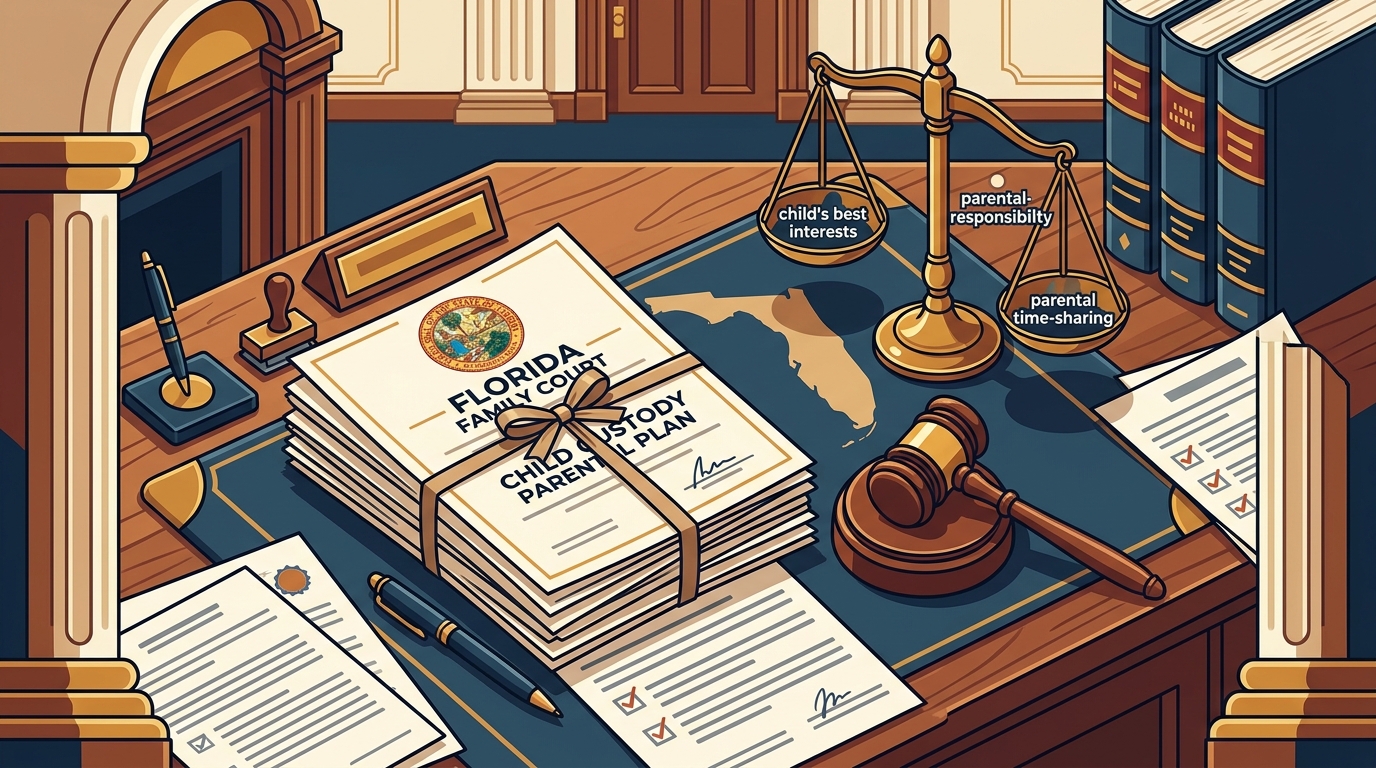
Florida Statute 61.13 establishes the "best interest of the child" as the primary standard for all custody determinations. Judges do not decide custody based on parental preference or gender. Instead, they evaluate a comprehensive list of statutory factors to determine what arrangement serves the child's welfare.
This standard is objective but highly fact-specific. What works for one family may be detrimental to another. The court looks at the emotional bond between the child and each parent, the capacity of each parent to provide a stable environment, and the child's adjustment to their home, school, and community.
Research indicates that children generally fare better when they maintain strong, continuous relationships with both parents, provided there is no history of abuse or neglect. Courts are increasingly aware of the psychological impact of separation and strive to minimize disruption to the child's routine. For more insights on child psychology in divorce, you can refer to the American Psychological Association.
Key Factors Courts Evaluate
When determining custody, Florida judges weigh several critical factors. Understanding these can help you prepare your case or negotiation strategy effectively.
1. Parental Capacity and Fitness
Courts assess each parent's ability to meet the child's physical, emotional, and developmental needs. This includes evaluating mental health, substance abuse history, and criminal records. Any history of domestic violence is a significant negative factor and may result in supervised visitation or loss of custody.
2. The Child's Preference
While children do not choose their parents, the court may consider the child's wishes if the child is of sufficient age and intelligence. Typically, this becomes relevant for teenagers. The judge may interview the child in chambers to ensure the preference is genuine and not influenced by parental pressure.
3. Geographic Proximity
The distance between the parents' homes is a practical consideration. If one parent plans to relocate, it can significantly impact the existing parenting plan. Florida law requires notice and court approval for significant relocations that affect custody schedules.
4. Historical Caregiving Roles
Courts look at who has historically been the primary caregiver. If one parent has managed the child's daily needs, such as school drop-offs, medical appointments, and homework, the court may be reluctant to disrupt that arrangement abruptly.
For a deeper understanding of how domestic violence impacts custody, review resources from the National Coalition Against Domestic Violence.
The Custody Litigation Process
Resolving custody disputes can involve several stages, from informal negotiation to full trial. The process varies depending on the level of conflict between the parents.
Initial Filing and Response
The process begins with one parent filing a Petition for Dissolution of Marriage or a Petition for Parentage. The other parent must file a response within 20 days. During this time, temporary orders may be established to address immediate needs like child support and interim parenting time.
Discovery and Investigation
Both parties exchange information through discovery, which may include financial affidavits, interrogatories, and depositions. In complex cases, the court may appoint a Guardian ad Litem (GAL) to investigate the family situation and make recommendations to the judge. The GAL acts as the eyes and ears of the court, interviewing parents, teachers, and the child.
Mediation
Florida requires parents to attempt mediation before a trial can be held. A neutral mediator helps parents reach a mutually agreeable parenting plan. Mediation is often less adversarial and more cost-effective than litigation. If mediation fails, the case proceeds to trial.
Trial and Judgment
At trial, both sides present evidence and witness testimony. The judge then issues a final judgment and parenting plan. This document is legally binding and outlines every aspect of the custody arrangement, including holidays, vacations, and dispute resolution procedures.
For guidance on navigating the mediation process, consider reading Florida Bar resources on family law mediation.
Comparing Custody Arrangements
Choosing the right custody arrangement depends on your family's unique dynamics. Below is a comparison of common options.
| Arrangement Type | Description | Best For |
|---|---|---|
| Shared Parenting | Both parents have significant time with the child, often a 50/50 split. | Parents who live close by and can communicate effectively. |
| Sole Legal Custody | One parent makes all major decisions. | Situations involving high conflict or one parent's unfitness. |
| Supervised Visitation | Non-custodial parent visits only with a third party present. | Cases involving safety concerns or abuse. |
| Graduated Parenting Time | Time with the child increases gradually over time. | Rebuilding relationships after a long absence. |
At Law Legal Group, P.A., we help clients evaluate which arrangement aligns with their goals and the child's needs. We also assist with child custody modifications when circumstances change.
Key Takeaways
- Florida uses "legal custody" and "physical custody" instead of traditional terms like visitation.
- The "best interest of the child" is the sole standard for judicial decisions, not parental rights.
- Mediation is a mandatory step in most Florida custody disputes before going to trial.
- A Guardian ad Litem may be appointed to represent the child's interests in complex cases.
- History of domestic violence is a critical factor that can limit or restrict custody rights.
- Parenting plans must be detailed and specific to avoid future conflicts.
- Law Legal Group, P.A. has served the Tampa Bay area since 2014, providing trusted legal advice.
Frequently Asked Questions
How is child support calculated in Florida?
Child support is calculated using a statutory formula based on both parents' incomes, the number of overnights each parent has, and healthcare costs. The formula is designed to approximate the percentage of income the child would have received if the household remained intact.
Can I modify an existing custody order?
Yes, but you must show a substantial, unanticipated change in circumstances that affects the child's best interest. Minor changes in schedule or income are usually insufficient. You must file a petition with the court to request a modification.
What happens if a parent violates the parenting plan?
Violations can lead to enforcement actions, including make-up time, attorney's fees, and even contempt of court charges. It is important to document all violations and consult with an attorney before taking matters into your own hands.
Do I need a lawyer for a custody case?
While you can represent yourself, custody cases involve complex legal procedures and evidentiary rules. An experienced attorney can help you navigate the system, protect your rights, and achieve a favorable outcome.
How long does a custody case take?
The timeline varies widely. Uncontested cases can be resolved in a few months. Contested cases involving discovery, mediation, and trial can take a year or longer. The complexity of the issues and the court's docket also play significant roles.
What is a parenting plan?
A parenting plan is a detailed document outlining how parents will share responsibilities and time with the child. It includes schedules for regular time, holidays, vacations, and methods for resolving disputes.
Can the child choose which parent to live with?
Children do not have the legal right to choose their parent. However, the court may consider the child's preference if they are of sufficient age and intelligence. The judge ultimately decides what is in the child's best interest.
What is the role of a Guardian ad Litem?
A Guardian ad Litem is a court-appointed attorney who represents the best interests of the child. They investigate the family situation, interview relevant parties, and make recommendations to the judge.
Contact Law Legal Group for Expert Custody Representation
Navigating child custody disputes requires strategic legal guidance and compassionate support. At Law Legal Group, P.A., we understand the emotional toll these cases take on families. Our team is dedicated to protecting your parental rights and securing a stable future for your children.
Whether you need assistance with initial filings, mediation, or trial representation, we are here to help. Contact us today to schedule a consultation and discuss your case. Visit our consultation page to get started.